Kinexis
Kinexis screens video and audio for synthetic media and influence signals — and states the limits of every read up front. A starting point for your judgment, never a verdict.
Sample report
Synthetic-media indicators are weak; two influence tactics observed across the segment.
1Authenticity
61%moderatemodel estimate, uncalibratedScreening, not a verdict — every read states its limits.


Probabilistic AI screening · Not a lie detector · Our analysis, your decision
How it works
Drop a video file or paste a URL. YouTube, TikTok, Spotify, SoundCloud, and more.
Deepfake screening, facial expressions, vocal patterns, language cues, timing, and narrative structure.
A structured report with authenticity assessment, behavioral signals, and credibility indicators. Typically ready in minutes.
Use cases
From individual fact-checking to enterprise content moderation — citizens, journalists, researchers, newsrooms, and financial analysts.
View all use cases →Pay per analysis
| Tier | Duration | Price |
|---|---|---|
| Quick check | Up to 5 min · Ideal for clips and social posts | $2.99 |
| Standard analysis | 5-15 min · News segments, interviews | $6.99 |
| Deep analysis | 15-30 min · Presentations, depositions | $14.99 |
| Full analysis | 30-120 min · Long-form interviews, hearings | $29.99 |
Private mode — +$1.99 — Report visible only to you
Enterprise — $299/mo — 50 analyses, API access, priority support
§ FAQ
Kinexis screens videos for AI-generated faces, synthetic audio, timeline splicing, and other manipulation artifacts. The analysis checks for deepfake indicators and audio-visual mismatches that are difficult to spot with the naked eye. Results include specific indicators and confidence levels rather than a simple pass/fail.
Kinexis uses FACS-based facial coding, vocal pattern analysis, linguistic cue detection, and narrative structure mapping to surface observable communication patterns. It identifies persuasion techniques such as urgency framing, emotional appeals, and authority positioning. Kinexis does not claim to detect deception or diagnose emotional states. All findings are probabilistic and include alternative explanations.
Kinexis accepts MP4, MOV, and WebM files up to 2 hours long via direct upload, as well as YouTube URLs. YouTube videos are processed natively without downloading. Both uploaded files and YouTube links go through the same multi-dimensional analysis pipeline.
Most analyses complete within a few minutes. Processing time depends on video length and current demand. You will receive your structured report as soon as the analysis finishes, and you can close the browser and return later.
By default, completed analyses are listed publicly in the Kinexis analysis gallery. If you need privacy, select private mode during checkout for a $1.99 surcharge. Private analyses are visible only to you and are excluded from the public gallery, search engines, and the sitemap.
No. Kinexis offers guest checkout so you can analyze a video without creating an account. Go to /analyze, upload or paste a URL, and pay per analysis. Creating a free account gives you a dashboard to revisit past reports.
Analyze
Paste a video URL or upload a file. Reports are ready within minutes.
→ Analyze a video nowKinexis.AI provides probabilistic, AI-generated analysis, not definitive verdicts. Our reports are tools to inform your judgment, not replace it.
Kinexis helps anyone ask: “Is this video real, and how is it trying to persuade me?” We combine AI-powered authenticity screening with structured behavioral analysis to help people evaluate what they see and hear online.
All analysis is performed by AI models, not human analysts. Our AI screens video for signs of synthetic manipulation, then processes it through multiple analytic lenses (expression, voice, language, body, context) and synthesizes the results into a structured report for further review.
We screen each video for indicators of AI generation or manipulation: synthetic faces, altered timelines, audio-visual mismatches, behavioral anomalies, and other artifacts that are difficult to spot with the naked eye. This screening examines both technical signals (pixel-level artifacts, audio inconsistencies) and contextual signals (behavioral plausibility, provenance, content consistency).
You get a summary of authenticity signals with confidence levels, not a simple “yes/no” verdict. Screening produces a probability estimate, not a guarantee. A clean result lowers suspicion but does not prove a video is authentic. Modern AI-generated media can be technically flawless, so contextual analysis is often more revealing than pixel-level inspection alone.
Once authenticity is assessed, we analyze how the video communicates across six modalities:
We surface patterns in delivery and communication technique. We do not claim to know what someone “really feels” or whether they are “lying.” Behavioral patterns have many possible explanations, and our reports present alternatives alongside every finding.
Beyond individual behavior, we assess the information environment. Video content exists within a communicative context. It may inform, persuade, mislead, or some combination of all three.
We surface framing choices, bias indicators, omissions, narrative structure, and audience targeting. Content can be strategic communication whether or not it's labeled as such. The patterns are presented for analysts to draw their own conclusions.
You get a structured report with:
Not all sections appear in every report. Videos without visible people will not include face-specific behavioral analysis. The AI adapts its output to what is observable.
We surface indicators and hypotheses, never verdicts. Findings carry confidence scores, whether they relate to authenticity signals or behavioral patterns. Our assessments are one input among many.
We cross-reference face, voice, body, language, and context to reduce reliance on any single signal.
When we're less certain, we say so. Alternative explanations are part of every assessment.
We detect and describe patterns in the content, not the character of the person in the video. Kinexis is not a lie detector. We don't determine guilt or intent.
Disinformation thrives when people lack the tools to question what they see. Every Kinexis report is designed to make the techniques visible — deepfake artifacts, emotional manipulation, narrative framing — so you can evaluate content on its merits, not its production value. Build a habit of checking before you share.
Kinexis.AI reports are for informational and educational purposes only. They do not constitute legal, medical, psychological, forensic, or professional advice of any kind. Do not use Kinexis.AI output as the sole basis for legal, employment, medical, financial, or safety-critical decisions.
Kinexis.AI does not guarantee the accuracy, completeness, or reliability of any analysis. All output is generated by AI models and reflects probabilistic inference, not verified fact. Users are responsible for independently verifying any findings before relying on them.
Kinexis.AI is not a lie detector, a forensic tool, or a substitute for professional investigation. The presence or absence of any signal in a report does not prove or disprove deception, authenticity, or intent.

General Flynn 5th Gen Warfare Video | Information Operations Analyzed
5th Generation Warfare Promotional Video | Narrative and IO Analysis
TWITTER · Aug 26, 2026 · 3:40

Donald Trump Interview | Behavioral Analysis — Delivery Patterns Coded
Behavioral Analysis of Donald Trump Interview on PAC Control
TWITTER · Aug 24, 2026 · 2:15

Miami Nightclub Arrest Bodycam | Behavioral Analysis — Stress Markers Detected
Behavioral Analysis of Subject During Law Enforcement Detention and Search
UPLOAD · Aug 2, 2026 · 18:14
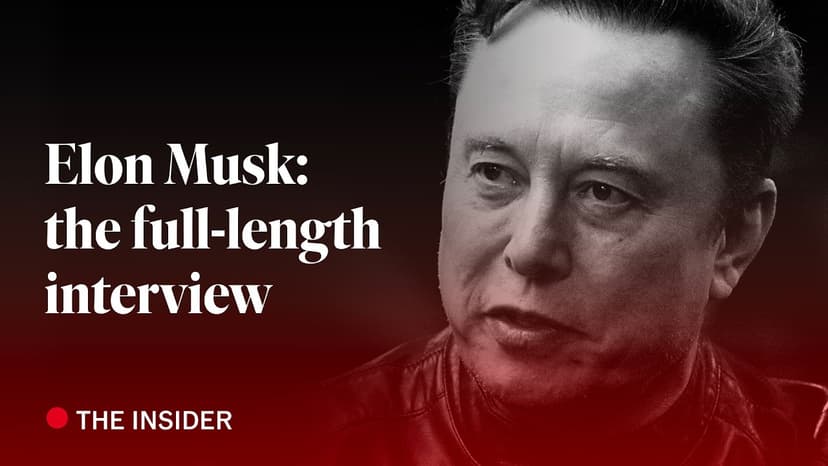
Elon Musk The Economist Interview | Behavioral Analysis — Shifts Detected
Behavioral Analysis: Relaxed Baseline Shifts to Defensive Posture During Political Scrutiny
YOUTUBE · Jul 30, 2026 · 1:25:07

Pete Hegseth Testimony | Behavioral Analysis — Evasion Tactics Observed
Behavioral Analysis of Sec. Hegseth's Congressional Testimony on Troop Deployment
TIKTOK · Apr 30, 2026 · 2:28

Tucker Carlson Podcast Apology | Behavioral Analysis — Delivery Patterns
Behavioral Analysis of Tucker Carlson's Podcast Statements on Trump and Iran
TIKTOK · Apr 21, 2026 · 1:37
